Early Signs of Dog Dementia Symptoms Checklist
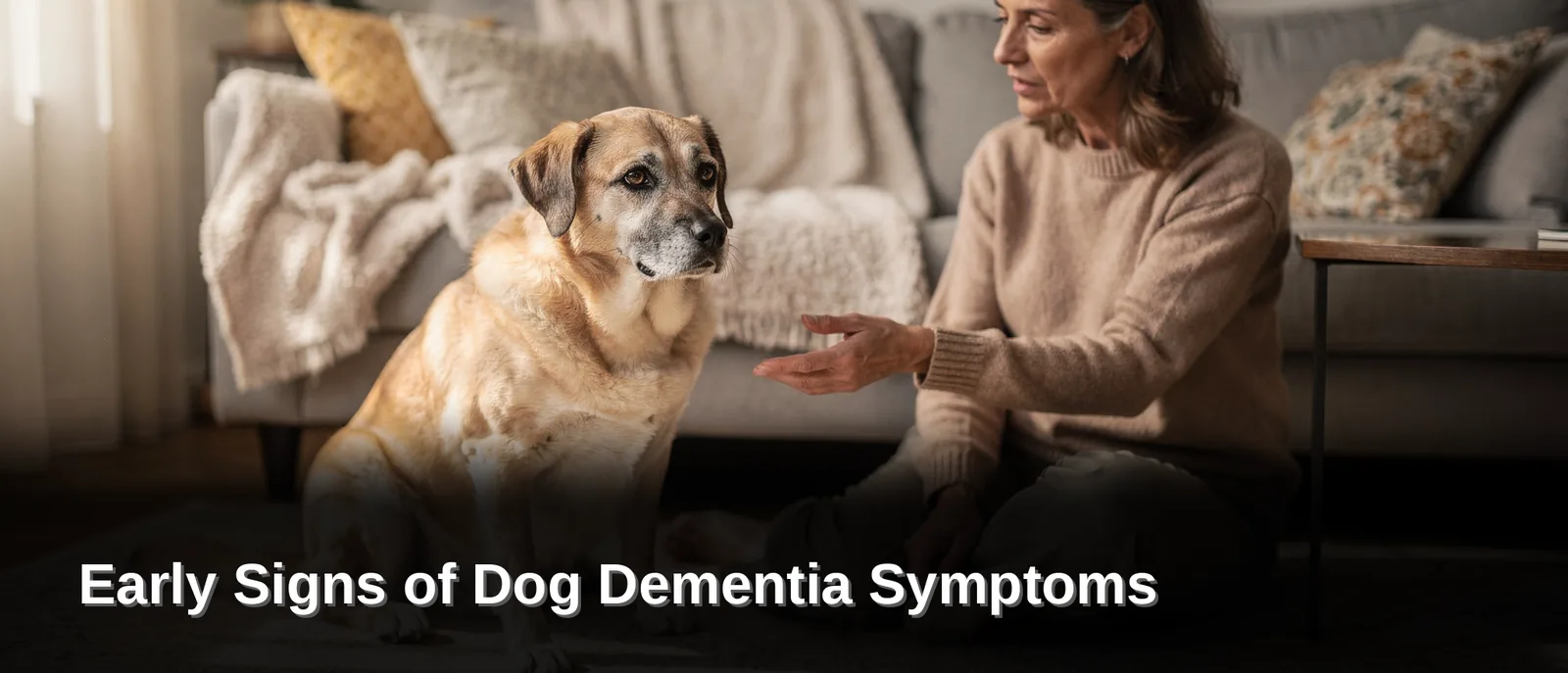
Canine cognitive dysfunction syndrome, a progressive brain condition affecting over half of dogs by age 15, follows the DISHAA framework: Disorientation, Interaction changes, Sleep-wake cycle disruption, House-soiling, Activity changes, and Anxiety. Dogs typically show first symptoms around age nine, making early tracking beneficial for owners who want to be proactive.
Key Takeaways
Canine cognitive dysfunction affects more than half of dogs by age 15 and resembles Alzheimer's disease.
Dogs develop cognitive dysfunction syndrome around nine years of age or older with slow behavioral progression.
The DISHAA Checklist provides veterinary diagnostic tools for identifying early stages of canine cognitive dysfunction.
Early detection through the DISHAA framework helps owners recognize neurodegenerative changes before advanced symptoms develop.
Is Your Senior Dog Acting Like a Stranger?
A once-affectionate dog who suddenly seems distant, confused, or startled by familiar faces isn't being difficult. Behavior shifts like these often point to a brain condition rather than stubbornness or spite. Cognitive changes in aging dogs confuse. Frighten families precisely because the dog still looks the same, even as personality and habits shift underneath.
Canine cognitive dysfunction syndrome, sometimes called dog dementia, ranks among the most under-recognized conditions in senior dogs. Veterinary experts describe it as a progressive brain disease with striking similarities to Alzheimer's, affecting many dogs as they age. Most owners assume slower steps and occasional confusion are simply "old age," when a diagnosable neurological condition may be at work.
What does dog dementia actually look like day to day?
Picture a dog pacing at night, staring blankly at walls, or forgetting a routine walked a thousand times. A practical dog dementia symptoms checklist helps families spot these shifts early rather than dismissing them.
Disorientation in familiar rooms or the backyard
Disrupted sleep-wake cycles, including nighttime pacing
Reduced interest in family members or other pets
House-training accidents despite no physical illness
Guidance for families facing these changes stays accessible no matter their zip code. Support reaches households nationwide through remote consultation. No family has to sit with these questions alone.
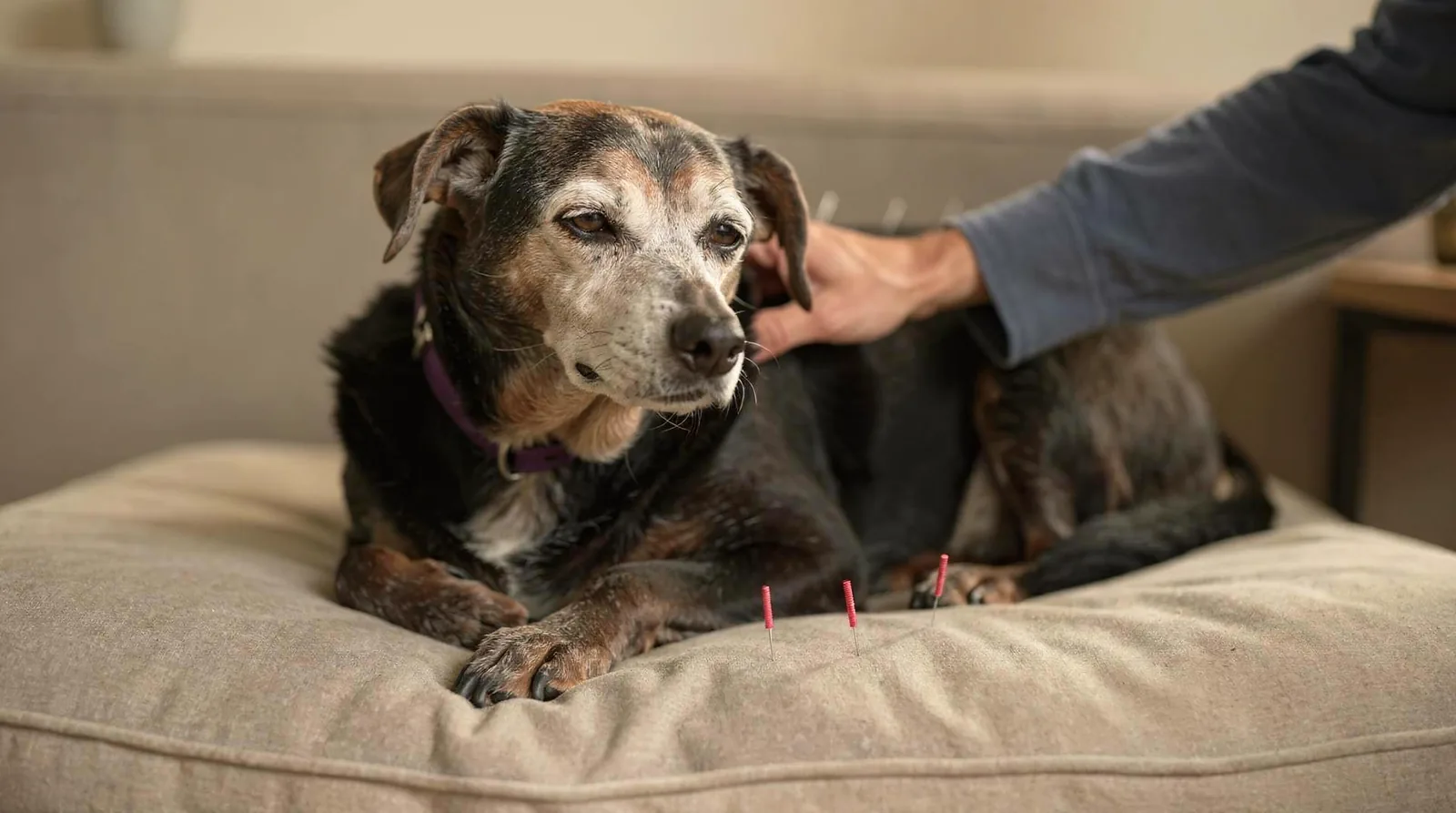
What Exactly Is Canine Cognitive Dysfunction?
Canine cognitive dysfunction is a brain disease tied to aging. It causes the kind of mental decline that looks strikingly similar to Alzheimer's disease in people. Dogs facing this condition aren't just "slowing down." Their brains are undergoing real, progressive changes that affect memory, awareness, and behavior.
Age plays a bigger role here than most owners expect. Dogs can begin developing cognitive dysfunction around nine years old, sometimes later, and the shift is often so gradual that families miss the early signs entirely. A dog staring blankly at a wall or forgetting a familiar command can seem like a random off day. Over time, though, these moments add up into a pattern worth naming.
Why Does Cognitive Decline Get Missed for So Long?
Slow, subtle change is easy to write off as normal aging. A dog who naps a little more or seems a bit less playful doesn't raise alarm bells the way a limp or a cough would. That's exactly why understanding what canine cognitive dysfunction actually looks like matters so much for catching it early.
Dr. Liz Fernandez brings a rare blend of expertise to families navigating this exact moment: veterinary medicine, hospice and palliative care, integrative treatment approaches, and human-animal grief support all rolled into one perspective. That combination matters because cognitive decline isn't purely medical. It touches the emotional bond between a dog and the family who loves them.
Her work has shifted intentionally toward palliative and end-of-life care in recent years, which means she spends her days immersed in exactly this stage of a dog's journey. That focus gives families a steady, experienced guide rather than a generalist trying to piece things together. When a dog's brain starts changing, having someone who truly understands that terrain makes all the difference.
Does Your Dog Seem Lost in Familiar Places?
Confusion in a dog's own home, a hallway they've walked a thousand times, a backyard corner suddenly unrecognizable, often signals disorientation tied to cognitive decline, not simple absent-mindedness. Dogs who pause at doorways, stare blankly at walls, or seem stuck behind furniture may be showing an early, measurable sign of brain aging rather than a passing quirk. That distinction matters. Missing it means missing months of early support that could ease the transition ahead.
Veterinary researchers have moved this conversation forward in a meaningful way. Experts have built diagnostic tools, including specific criteria for spotting disorientation, designed to separate true pathological decline from the normal slowing that comes with age. That's a big shift. It gives families and veterinarians a shared language instead of guesswork.
What Does Disorientation in Senior Dogs Actually Look Like?
Disorientation shows up in small, repeated moments rather than dramatic episodes. A dog might get "stuck" in corners, wander to the wrong side of a door, or seem confused about where food and water bowls sit. Building a dog dementia symptoms checklist helps families track these patterns over weeks instead of relying on memory alone.
Common signs include:
Staring at walls or into empty space
Pacing without a clear destination
Getting trapped behind furniture or in corners
Trouble finding the door after going outside
Delayed recognition of familiar rooms
No two dogs decline the exact same way. No single diagnosis erases the emotional weight of watching a once-confident companion grow confused at home. That weight deserves acknowledgment, not just a clinical checklist. Whatever the diagnosis reveals, families find a steady, compassionate presence walking beside them through every stage of this journey.
Are Your Dog's Interactions With You Changing?
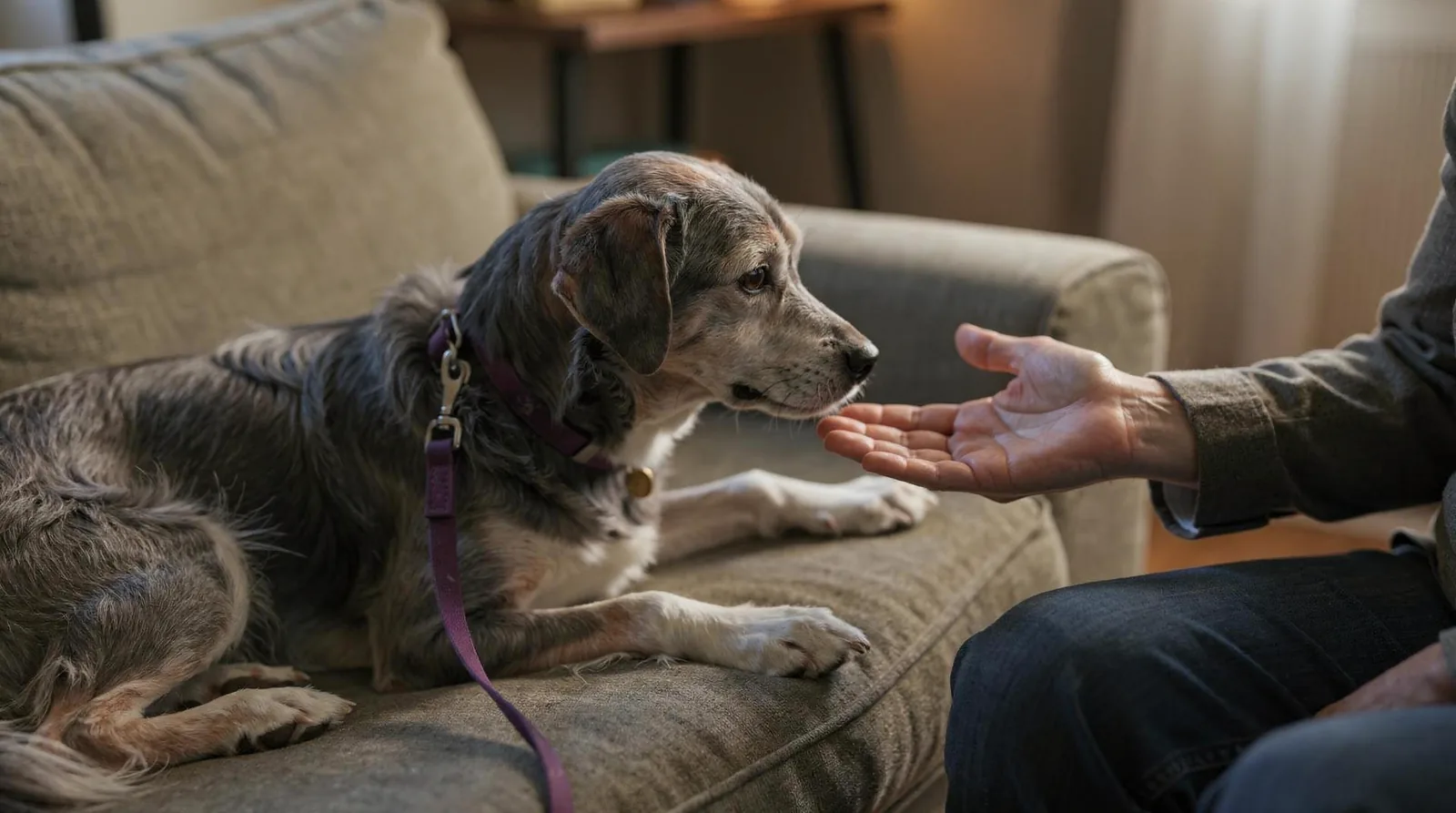
A shift in how a dog greets, follows, or responds to a beloved owner often signals more than a bad mood or an off day. Gradual, degenerative changes in the aging brain can quietly reshape the bond between a dog and the people it knows best. That distant stare instead of a tail wag, or a hesitation before coming when called, deserves attention rather than a shrug.
For families building out a dog dementia symptoms checklist, relationship changes belong near the top. Watch for:
Less enthusiasm at homecomings or reduced eye contact
Wandering away mid-pet or avoiding physical affection
Failing to recognize familiar family members, especially in dim light
Increased clinginess or, conversely, withdrawal from the household routine
Confusion during play that once felt effortless
Why Would a Dog Suddenly Seem Distant From Its Owner?
Cognitive decline doesn't erase love, but it does interfere with how a dog processes familiar faces, voices, and routines. Neurodegenerative changes affect memory and recognition, which can make even a devoted companion seem confused or emotionally checked out.
Is It Normal for an Older Dog to Pull Away From Affection?
Occasional independence is normal in aging dogs, but a consistent pattern of avoidance is not something to dismiss. Dr. Liz Fernandez has walked alongside countless pet parents navigating this exact stage. The bond itself feels like it's shifting underfoot. As both a veterinarian and a pet parent who has lived this journey personally, she understands how gut-wrenching it feels when a once-affectionate dog seems to drift away. That firsthand understanding shapes a compassionate, judgment-free approach to every family facing these changes.
Is Your Dog's Sleep-Wake Cycle Flipped?
Nighttime pacing, restless whining, and daytime snoozing signal a disrupted sleep-wake cycle, one of the most telling entries on any dog dementia symptoms checklist. Dogs experiencing this reversal often sleep soundly through the afternoon, then wake confused and vocal once the house goes dark. For exhausted families, this pattern isn't just inconvenient. It's often the first clear sign that something deeper is happening in an aging dog's brain.
Neurons, the specialized brain cells responsible for transmitting information throughout the nervous system, help regulate countless physical and mental processes. Among them: the internal clock that tells a dog when to rest and when to stay alert. When these cells decline with age, that regulation breaks down. The result is a dog who seems wide awake at 3 a.m. and groggy at noon.
Veterinary experts now classify this kind of disruption under a broader diagnosis known as canine cognitive dysfunction, described as a chronic, progressive, age-related syndrome. Behavioral changes, including flipped sleep patterns, vary in severity from dog to dog and tend to worsen gradually rather than appear overnight.
Why does my senior dog pace at night?
Nighttime pacing often reflects confusion or anxiety tied to cognitive decline, not simple restlessness. A dog whose neurons aren't firing the way they used to may lose track of familiar surroundings after dark, triggering unsettled movement and vocalization.
Can a flipped sleep schedule be managed at home?
Support is available, even in the middle of the night. Nationwide telehealth consultations connect worn-out families with hospice and palliative guidance from the comfort of home. Compassionate support remains just a call away, whatever the hour.
Why Is Your House-Trained Dog Having Accidents?
Indoor accidents in a previously reliable dog often signal cognitive decline, not defiance or spite. For senior dogs, house-soiling ranks among the most common early red flags on any dog dementia symptoms checklist, alongside disorientation and altered sleep patterns. The behavior can feel confusing and even hurtful to families who've spent years building a routine that worked.
Here's the encouraging part: accidents don't have to signal a hopeless decline. Early intervention, including environmental enrichment, dietary changes, and medical management, genuinely improves quality of life for dogs facing cognitive changes. Catching the shift early gives families more tools and more time.
Is house-soiling always a sign of dementia?
Not necessarily. Medical issues like urinary tract infections, kidney disease, or mobility pain can also cause indoor accidents, so ruling those out first matters. A veterinary exam helps separate a physical cause from a cognitive one, and sometimes both are at play together.
What should families do when accidents start happening?
Start with a conversation, not a punishment. Consider these steps:
Schedule a veterinary exam to rule out physical causes
Track frequency, timing, and any other new behaviors
Adjust feeding and bathroom schedules to reduce nighttime confusion
Explore diet and supplement options with a veterinary professional
Families working through this stage rarely need to navigate it alone. Wisdom Paws, based in California, offers judgment-free guidance to pet parents grappling with frustrating new symptoms like indoor accidents. Dr. Liz Fernandez considers it a privilege to sit with families as they share their worries, fears, and grief over changes like these. Nobody chose this chapter, but nobody has to walk through it without support, either.
Has Activity or Anxiety Changed Overnight?
Sudden shifts in energy or new nervousness rarely appear out of nowhere in an aging dog. Cognitive decline tends to creep in gradually. What looks like an overnight change is usually the tipping point of a slower pattern finally becoming visible. Catching that pattern early makes a real difference in how families respond. How much comfort their dog experiences along the way.
A structured behavioral framework gives families and their veterinarians a shared language for tracking these shifts. Rather than relying on memory or gut feeling, this kind of framework organizes observations around the recognized domains of cognitive change, including activity level and anxiety. That structure turns vague worry ("something seems off") into specific, trackable detail a veterinary team can actually use.
What counts as an activity or anxiety change worth watching?
Restlessness at night, pacing without a clear reason, or sudden clinginess toward family members all count. So does a dog who once tolerated being alone but now panics when left in another room. A practical dog dementia symptoms checklist helps senior dog owners spot these shifts early. Keep monitoring them over time, rather than dismissing each change as a one-off bad day.
Watching a beloved dog develop new fears or lose interest in favorite activities takes an emotional toll, not just a medical one. Wisdom Paws holds space for both sides of that experience, honoring the depth of the bond between families and their pets alongside the clinical picture. Dr. Liz Fernandez's career path, moving from holistic housecalls toward palliative and end-of-life focused care, reflects exactly this kind of dual support. Families navigating a dog's new restlessness or anxiety find in her a guide who understands both what's happening in the brain and what it feels like to witness it.
What Should You Do About These Signs?
Clarity beats guesswork when a dog starts acting like a stranger in familiar surroundings. A structured dog dementia symptoms checklist turns scattered worries (the pacing, the blank stares, the accidents indoors) into a pattern a veterinary professional can actually work with. Owners interested in staying ahead of their dog's cognitive health benefit most from tracking specific changes rather than waiting for a single dramatic moment.
Wisdom Paws consultations exist for exactly this kind of confusion. Rather than reacting with fear when symptoms pile up, families get a compassionate, structured way to sort through what they're seeing. Every consultation centers on honoring the dog's dignity while giving the family real answers, not vague reassurance.
How does location affect access to this kind of guidance?
Distance shouldn't decide whether a family gets timely support. Wisdom Paws offers telehealth consultations nationwide. Owners anywhere in the country can get guidance without a long drive to a specialty clinic. Families across Ventura, Santa Barbara, and Los Angeles Counties also have the option of in-home visits, which keeps an anxious or unsteady senior dog in a comfortable, low-stress environment.
Who should families trust to interpret early cognitive changes?
Experience with this exact life stage matters more than a general veterinary background. Dr. Liz Fernandez's career has shifted deliberately toward palliative. End-of-life care, building deep familiarity with the subtle, often-missed early signs of cognitive decline. That focus means consultations aren't a generic checkup bolted onto a busy clinic schedule. They're built around this specific chapter of a dog's life.
Once a checklist reveals a pattern worth watching, the next step is simple:
Document the changes. Note when disorientation, altered sleep, or house-soiling started and how often it happens.
Bring the notes to a consultation. A clear timeline helps identify whether the pattern points toward cognitive decline or something else entirely.
Revisit the checklist regularly. Cognitive symptoms shift over weeks and months, not overnight.
Ongoing resources also exist for tracking how symptoms evolve. How a dog responds to any intervention tried along the way. That kind of monitoring turns a one-time consultation into a living plan, one that adjusts as the dog's needs change. Watching a beloved dog's personality fade at the edges is hard enough without navigating it alone; structured support makes the process feel manageable instead of overwhelming.
FAQ
What does the DISHAA acronym stand for?
DISHAA represents Disorientation, Interaction changes, Sleep-wake cycle disruption, House-soiling, Activity changes, and Anxiety, six categories veterinary experts use to identify canine cognitive dysfunction in aging dogs.
At what age do dogs typically develop cognitive dysfunction?
Dogs typically develop canine cognitive dysfunction syndrome around nine years of age or older, with symptoms progressing slowly and often mistaken for normal aging.
Can families outside California get help from Wisdom Paws?
Yes, Wisdom Paws provides remote consultation. Guidance for families facing cognitive changes in their dogs reaches households nationwide, not just in California.
What's next?
Recognizing these early signs of canine cognitive dysfunction gives you the gift of time, time to support your aging companion with compassion and intentional care. Your veterinarian remains your trusted partner in this journey, helping you understand what your dog is experiencing and exploring options that honor their quality of life. Trust your instincts as their devoted caregiver, and remember that noticing these changes reflects the deep bond you share.